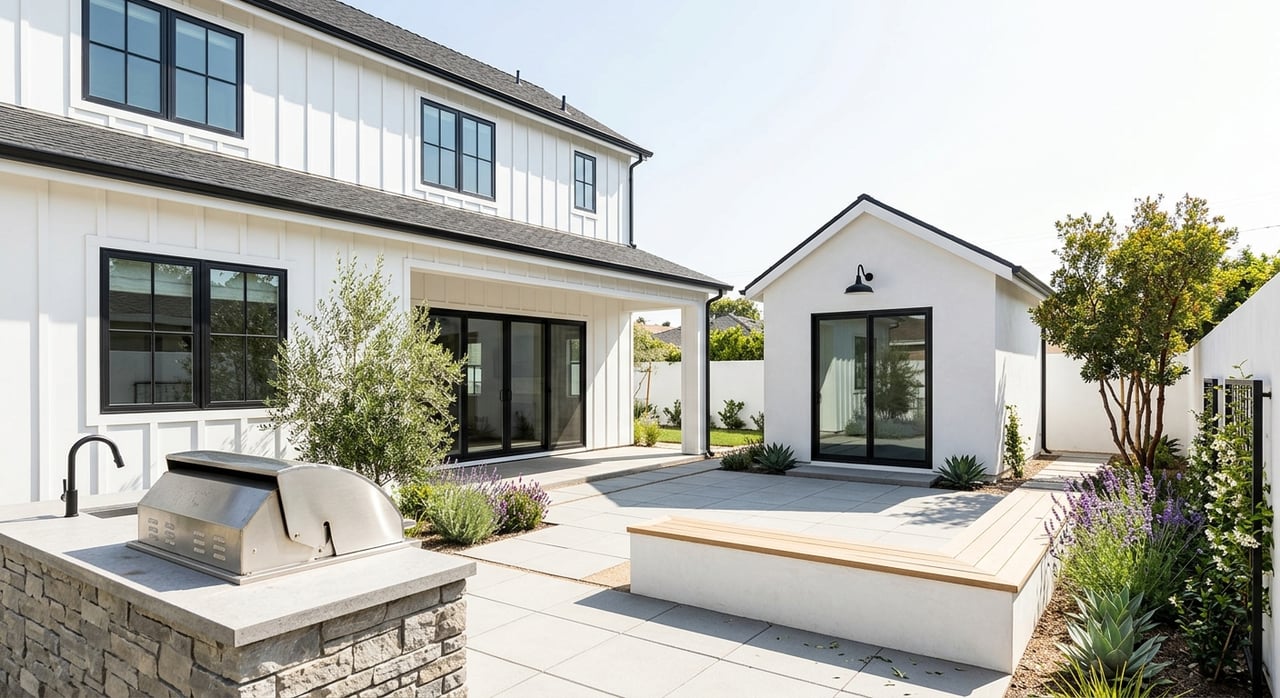
If you are looking at Glendora as a place to build long-term real estate value, the biggest opportunities are not always the flashiest ones. In many cases, they come from understanding zoning, spotting older housing stock with upside, and knowing where an ADU may fit into your plan. This guide breaks down what you should know about Glendora investment properties and ADU potential so you can evaluate options with more confidence. Let’s dive in.
Why Glendora Draws Investor Interest
Glendora remains a heavily single-family market, which shapes the types of opportunities you are most likely to find. In the city’s 2021-2029 Housing Element, Glendora reported 13,306 single-family detached homes, equal to 72% of the housing stock, along with smaller shares of attached homes, small multifamily, larger multifamily, and mobile homes. The same report noted a 4.0% overall vacancy rate in 2020, including 4.3% rental vacancy and 0.8% owner vacancy, which points to a fairly tight housing environment in practical terms. The city’s housing element is the best local source for that context.
Another important factor is age. According to the same housing element, more than 65% of Glendora’s housing units are over 50 years old. For you, that can matter because older homes may offer renovation, modernization, accessibility, or layout-improvement potential that supports value-add strategies without requiring ground-up development.
What the Local Housing Mix Means
Because Glendora is still largely made up of single-family homes, many small-scale investment plays center on existing houses rather than large apartment acquisitions. That can include buying a home with a detached garage, updating an older property, or adding an ADU where the site and zoning allow it. In this market, incremental improvements often matter as much as large-scale redevelopment.
The pricing backdrop also matters when you are running numbers. The research report notes current market snapshots showing an average home value of $884,324 and an average rent of $2,950 per month. Those figures are snapshots, not guarantees, but they help frame why careful underwriting is so important in a higher-priced market like Glendora.
Where Multifamily Fits in Glendora
Not every part of Glendora is set up the same way for investment use. Glendora’s zoning code separates single-family zones, such as R-1, E-3 through E-7, and RHR, from multiple-family zones, including R-2, R-3, GA, and LGA. Duplexes and housing with three or more units are permitted in the multiple-family zones, while ADUs are permitted in residential zones.
That distinction is important if you are comparing a single-family value-add purchase against a small multifamily acquisition. A property may look attractive on paper, but the zoning will strongly affect what you can actually do with it. Before you underwrite a project, you should confirm the parcel’s zone and whether any specific plan or overlay also applies.
Transit-area opportunities
One area worth watching is the area around the Glendora Metro Station. The Glendora Station Area Plan says the half-mile radius around the station is central to the city’s housing strategy and has potential for up to 1,283 residential units in mixed-use or all-residential development. That does not mean every parcel is a simple opportunity, but it does show where Glendora sees future growth.
The research report also highlights the Grand-Foothill multifamily overlay, which is intended to support planned multifamily redevelopment and allows multiple-family uses by right. For investors focused on infill or small multifamily positioning, these planning areas deserve close review.
ADU Potential in Glendora
For many buyers and small investors, ADUs are the clearest path to adding flexibility and possible income to a property. Under Glendora’s current code, an ADU may be allowed on any lot zoned for single-family or multifamily residential use. The code states that an ADU may be up to 1,200 square feet, must maintain 4-foot side and rear setbacks, may be up to two stories and 25 feet tall, and does not require off-street parking.
That combination can make ADUs one of the more approachable ways to improve a property’s utility. In some cases, the opportunity is even more practical when there is already a detached structure on site. The code says an existing detached accessory structure can be converted to an ADU without a setback change if the footprint and location stay the same.
Why ADUs often stand out
ADUs are also appealing because the approval framework is generally more predictable than many other development paths. According to California HCD’s ADU guidance, qualifying ADUs are processed ministerially, are statutorily exempt from CEQA, and must be reviewed without discretionary review or a public hearing. In plain terms, that can reduce uncertainty compared with projects that require broader entitlement review.
The city also signals support for this housing type. Glendora’s planning documents describe ADUs as a naturally occurring housing option and note that the city has preapproved ADU plans and intends to maintain compliance with state law while offering expedited review. That can be useful if you are searching for a more straightforward improvement path.
JADUs and Owner-Occupancy Rules
A junior accessory dwelling unit can also be part of the conversation, but it comes with narrower rules. Under Glendora’s code, a JADU is limited to 500 square feet, and only one JADU is allowed on a single-family lot. The code also requires owner occupancy in either the primary home or the JADU.
That owner-occupancy rule matters if you are evaluating a pure investor strategy versus an owner-occupant strategy. A JADU may be a practical fit for multigenerational living or flexible household use, but it is not the same as a standard detached ADU from an underwriting standpoint.
Short-term rental limits
The city’s code also says that the primary dwelling and any ADU or JADU may not be rented for less than 30 days. That means short-term-rental strategies are limited. Glendora’s housing element further notes that the city adopted Ordinance 2055 in 2020 to address impacts tied to short-term rentals, including noise, parking, refuse, and traffic disruption.
For most buyers and investors, the cleaner path is usually a long-term lease or mid-term lease model, not a vacation-rental approach. That is an important assumption to build into your numbers from the start.
ADUs on Multifamily Properties
If you own or are considering a multifamily property, ADU rules can create another layer of opportunity. According to Glendora’s code, owners may convert non-livable space such as storage rooms, boiler rooms, attics, basements, or garages into ADUs, with a cap of 25% of the existing multifamily unit count. The code also allows ADUs on lots with an existing or proposed multifamily dwelling.
That said, this is one area where you should be careful. The research report notes that California HCD updated its ADU handbook in January 2025 and added a 2026 addendum, so you should verify whether current state law allows more than the city’s codified standard before finalizing your underwriting. When local code and state law interact, details matter.
Risks to Check Before You Buy
A property can look perfect at first glance and still carry constraints that change the deal. In Glendora, one of the biggest issues to check is fire-zone status. The research report explains that the city has mapped very high fire hazard severity zones because of chaparral, Santa Ana winds, steep terrain, and lower water pressure in certain areas.
That matters because under current ADU rules, an ADU is not permitted in a very high fire hazard severity zone if the lot is not served by a city-standard public or private street. If your plan depends on adding an ADU, this is not a detail to save for later.
Other site constraints to review
The research report also notes that some properties may face limits related to:
- Historic status or HPOZ rules
- 100-year floodplains and floodways
- Protected habitat areas
- Specific-plan or overlay requirements
- Physical site constraints such as setbacks and access
In addition, SB 9 lot split and secondary unit opportunities are not universal in Glendora. Certain parcels are excluded, including some with historic, floodplain, habitat, or very high fire hazard constraints. If your investment thesis depends on splitting a lot or adding units through that route, parcel-level review is essential.
A Practical Glendora Due-Diligence Checklist
Before you make an offer on a property with ADU or investment potential, start with the basics. The research report points to several checks that can help you avoid expensive surprises.
Review these items early
- Confirm the parcel’s zoning designation
- Check for any overlay district or specific plan
- Verify fire-zone status
- Review historic status
- Check whether the parcel is in a floodplain or floodway
- Evaluate whether the lot can physically support an ADU with required setbacks and access
- For multifamily, confirm whether your planned ADU count is governed by current state law or the city’s codified standard
This is where a commercially minded review can make a big difference. A property that appears to have “garage conversion potential” or “extra lot space” may still need a closer look before it makes sense financially.
Best-Fit Investment Strategies in Glendora
Based on the city’s housing mix, zoning structure, and planning priorities, the strongest small-scale opportunities in Glendora often fall into a few buckets. The research report points most clearly to older single-family homes with ADU or garage-conversion potential, along with select small multifamily assets and transit-area or corridor properties in the right zones.
That does not mean every older home is an investment opportunity or every R-2 parcel is a winner. It means the best opportunities are often the ones where zoning, lot layout, building condition, and long-term rental strategy line up. In a market like Glendora, disciplined analysis usually beats assumptions.
If you want help evaluating a property, running through the local zoning picture, or weighing whether an ADU strategy fits your goals, James Martindale offers the kind of local, consultative guidance that can help you make a more informed decision. Schedule a free consultation to talk through your next move.
FAQs
What types of investment properties are most common in Glendora?
- Glendora is primarily a single-family market, with the city’s housing element reporting that 72% of the housing stock is single-family detached, so many small-scale opportunities center on houses rather than larger apartment properties.
Can you build an ADU on a single-family property in Glendora?
- Yes. Glendora’s code allows an ADU on lots zoned for single-family or multifamily residential use, subject to rules on size, setbacks, height, and site conditions.
How large can an ADU be in Glendora?
- Under the city’s current code, an ADU may be up to 1,200 square feet, with 4-foot side and rear setbacks and a maximum height of 25 feet and two stories.
Does a Glendora ADU require parking?
- No. The research report states that Glendora’s current ADU code does not require off-street parking for an ADU.
Can you convert a garage or accessory structure into an ADU in Glendora?
- In some cases, yes. Glendora’s code says an existing detached accessory structure can be converted to an ADU without changing setbacks if the footprint and location remain the same.
Are short-term rentals allowed for ADUs in Glendora?
- The city’s code says the primary dwelling and any ADU or JADU may not be rented for less than 30 days, so a long-term or mid-term rental strategy is usually the more practical route.
What should you check before buying a Glendora property for ADU potential?
- You should review zoning, any overlay or specific plan, fire-zone status, historic status, floodplain status, and whether the lot can physically support the ADU with required setbacks and access.
Are there multifamily ADU opportunities in Glendora?
- Yes. Glendora allows certain conversions of non-livable multifamily spaces into ADUs and also allows ADUs on lots with existing or proposed multifamily dwellings, though current state law should be verified before final underwriting.