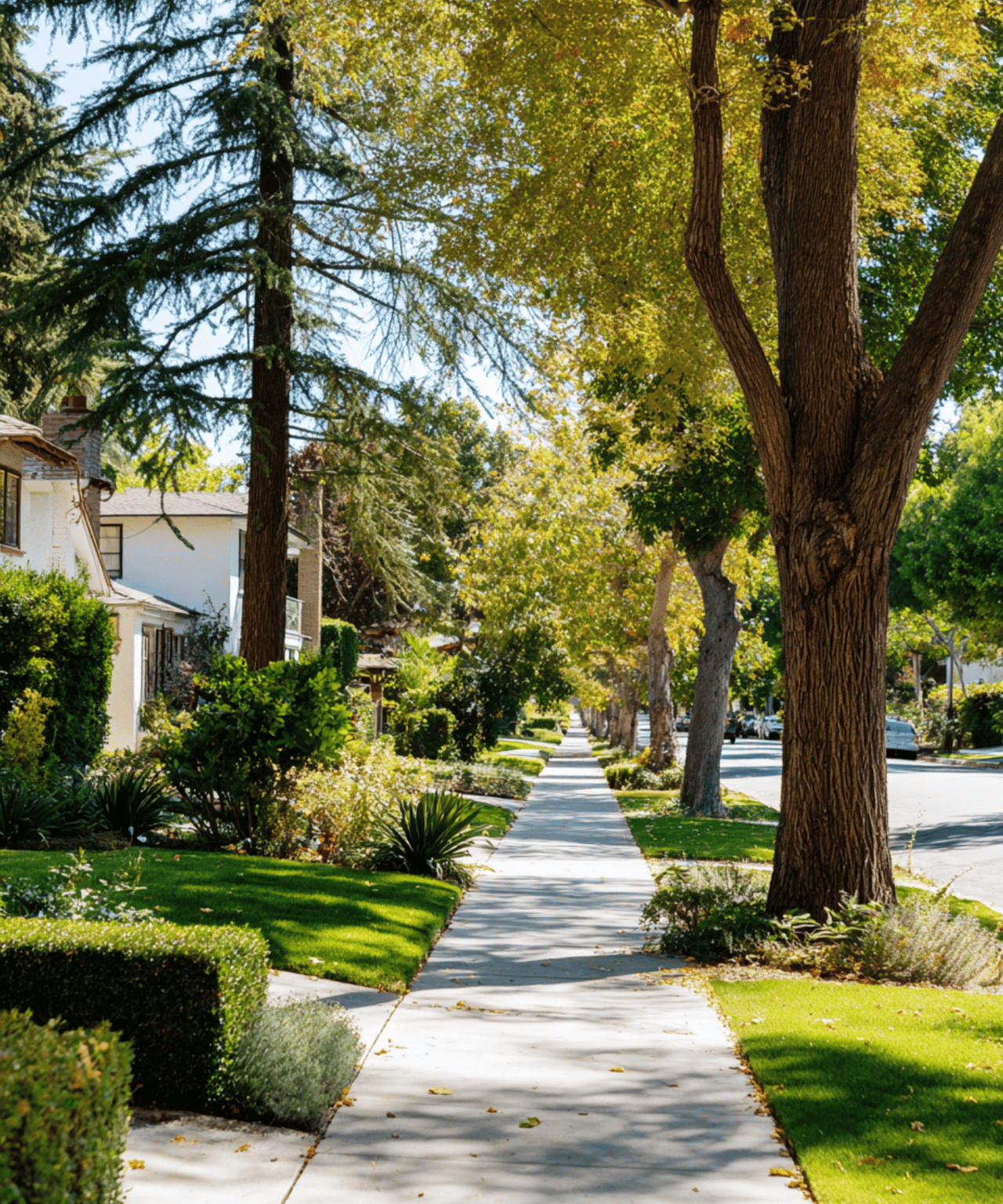
Which side of Sierra Madre Avenue is your house on?
For most of Glendora that question is meaningless. It's just a street. But for a strip of homes tucked against the base of the San Gabriel Mountains, that line determines whether a listing needs disclosure forms, whether a buyer's lender waits a day for proof of insurance or a month, and whether the home next to a mountain view prices like every other foothill property or gets quietly discounted before it ever hits the market. The zone label matters. What matters more, and what almost nobody explains clearly, is the paperwork that sits underneath the label, and how much that paperwork is now worth in dollars.
A Street Became the Boundary in 2014
On January 16, 2014, a campfire left burning above Glendora Mountain Road grew into the Colby Fire. Fanned by Santa Ana winds, it burned toward 2,000 acres in the San Gabriel Mountains, destroyed five homes, and pushed evacuation orders down the hillside. The order that mattered for property lines: officials closed every street north of Sierra Madre Avenue between Glendora Mountain Road and Yucca Ridge, and directed patrol officers to treat homes on Glendora Avenue north of Sierra Madre as the most vulnerable in the city.
That boundary was not improvised. It matches the city's own regulatory map. Glendora's municipal code, in Chapter 19.06, designates a defined fire hazard severity zone in the foothill tract, adopted specifically because those parcels carry a materially higher incidence of fire hazard than the rest of the city. The Colby Fire simply confirmed, in real time, what the map already said on paper.
Schorr Law explains that the state's Natural Hazard Disclosure Statement asks a yes-or-no question about your parcel: is it located in a Very High Fire Hazard Severity Zone as mapped by CAL FIRE and adopted locally? For a home a few blocks north of Sierra Madre, the honest answer is yes. For an architecturally identical home a few blocks south, it's no. Same builder, same decade, same square footage, different form.
The Paperwork Got More Specific Last Summer
Until recently, that yes-or-no answer was most of the story. Sellers in a Very High zone disclosed the zone, and since 2021, provided proof of defensible space compliance under Assembly Bill 38.
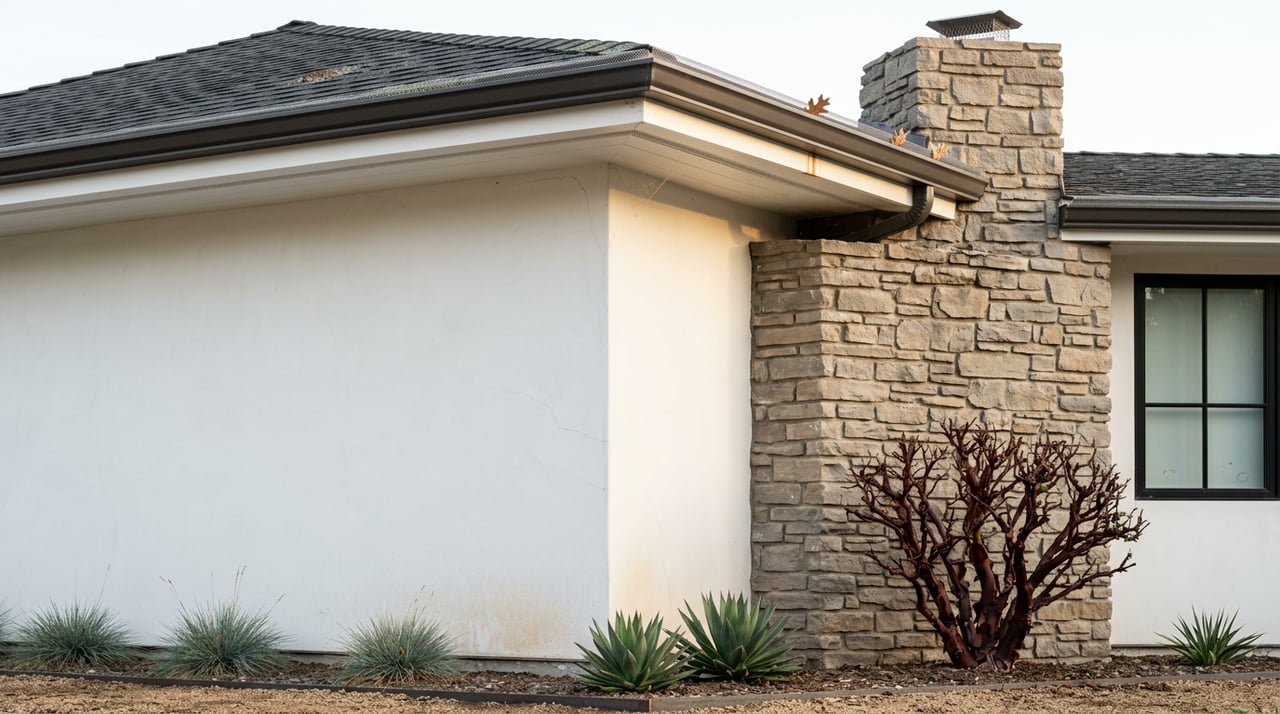
As of July 1, 2025, the requirement expanded. Sellers of homes built before January 1, 2010 and located in a High or Very High zone must now hand buyers a specific checklist covering the building itself, not just its location. The statutory notice tells buyers plainly that the home predates the state's wildfire-resistant building codes. Sonoma Valley Fire lists six items in that inventory: ember-resistant vents at the eaves and roofline, the roofing material itself, combustible landscaping within five feet of the structure, tempered versus single-pane glass, roof flashing, and whether gutters have noncombustible covers.
That is a meaningfully different document than the one sellers filled out five years ago. It stopped asking "where is this house" and started asking "what is this house actually built out of."
| Requirement | Before July 2025 | As of July 2025 |
|---|---|---|
| Zone disclosure | Yes or no, based on CAL FIRE map | Same |
| Defensible space compliance | Documentation or written buyer agreement | Same |
| Building-level hardening detail | Not required | Six-item checklist, itemized per feature |
Two Houses on the Same Block, Different Insurance Quotes
Here is where the paperwork stops being paperwork and starts being pricing.
A home in Glendora's Very High zone that cannot get coverage through a standard admitted carrier lands on the California FAIR Plan, the state's insurer of last resort. FAIR Plan policies cover fire-related perils only. Because that leaves out liability, theft, water damage, and loss of use, mortgage lenders generally require a separate Difference in Conditions policy layered on top before they'll fund the loan. That's two bills instead of one, arranged by two different carriers, before a buyer can close.
The FAIR Plan is not static pricing either. It filed for an average 35.8 percent rate increase in October 2025, targeted for an April 2026 effective date, with roughly half of policyholders facing increases in the 40 to 55 percent range. Separately, on November 15, 2025, a new hardening discount took effect, offering up to 16.4 percent off the wildfire portion of a FAIR Plan premium, but only for properties that document all twelve qualifying hardening measures.
The six-item AB 38 checklist and the twelve measures required for the discount are not interchangeable. The checklist alone does not establish eligibility for the discount or determine whether a home needs the FAIR Plan. A seller who already has ember-resistant vents, tempered glass, and gutter covers in place, and can prove it, isn't just checking a box for the buyer's peace of mind. They're handing the buyer's insurance search a documented shortcut. A seller who can't produce that record is handing the buyer a guessing game, and buyers who have to guess tend to guess conservatively, against the seller.
What Silence on the Form Actually Costs
A working paper published through Resources for the Future, comparing home sales across boundaries with different wildfire disclosure requirements, found that disclosing wildfire risk reduces the sale price of a single-family home by an average of 4.3 percent. That's the cost of the label alone, at the moment of disclosure.
In Glendora's foothill tract, the cost doesn't stop there. Every time a buyer's insurance broker comes back mid-escrow with a FAIR Plan-plus-DIC quote instead of a standard admitted policy, because the hardening documentation wasn't ready, that's a second negotiation. Buyers ask for credits. Lenders ask for extensions. Deals that should close in thirty days stretch toward forty five while everyone waits on paperwork that could have been assembled before the listing ever went live.
Before You List a Foothill Home
- Confirm your parcel's current zone status directly rather than relying on memory of the old boundary. Mapping gets updated, and a parcel that wasn't in a Very High zone a decade ago may be now.
- Request defensible space compliance documentation from the appropriate fire authority before listing. If it isn't available in time, Wildfire Today reports that state law allows buyer and seller to sign a written agreement for the buyer to obtain it within a year of closing, but that's a concession, not a solution.
- Walk your own home against the six hardening checklist items before a buyer's inspector does. Know what's present and what isn't.
- Get one insurance quote before you list, not after you're already in escrow. It tells you whether you're pricing into the admitted market or the FAIR Plan.
- Pull together permits and receipts for any retrofits you've made. They support both the disclosure form and any hardening discount a buyer's insurer might apply.
The Rule Sacramento Is Trying to Write Next
State Senator Sasha Renée Pérez, whose Senate district includes Glendora, introduced Senate Bill 1076 in February 2026. The bill would require insurance companies to offer and renew coverage for any home meeting wildfire safety standards set by the Insurance Commissioner, including home hardening and defensible space measures, and would let the Commissioner bar noncompliant insurers from the market for five years. It's co-sponsored by the Eaton Fire Survivors Network and Consumer Watchdog. Six months after introduction, it remains a bill working through the legislative process rather than enacted law, so it does not change anyone's disclosure or insurance obligations yet.
If it passes in some form, a Glendora foothill seller's AB 38 checklist may help document hardening, but it would not by itself establish that the home meets the Insurance Commissioner's standards for a standard offer of coverage rather than just a discount. That's a good reason to keep the documentation current regardless of how the bill lands.
Common Questions
Does every home in Glendora need this disclosure? No. Only parcels within the mapped High or Very High Fire Hazard Severity Zone, as designated by CAL FIRE and adopted in the city's own fire district map, trigger it. Check the specific parcel rather than assuming based on which neighborhood it's in.
What decides the "built before 2010" cutoff? It ties to the state's adoption of Wildland-Urban Interface building codes. Homes permitted after that point generally already used the ember- and flame-resistant materials the checklist is asking about, which is why the requirement targets older stock specifically.
Does a FAIR Plan policy satisfy my buyer's lender on its own? Usually not. Because FAIR Plan coverage is fire-only, most lenders require a Difference in Conditions policy alongside it before they'll fund. Build that extra step into your escrow timeline expectations.
Can I list without defensible space compliance documentation in hand? Yes. State law permits a written agreement between buyer and seller for the buyer to obtain that documentation within a year of closing. It keeps a deal moving, but most buyers would rather see the paperwork upfront.
Foothill value in Glendora was never just about the view. It's about which side of one street you're standing on, and whether you can prove it on paper before anyone asks. If you're not certain where your documentation stands, or what it might mean for how your home should be priced and marketed, The Martindale Group offers a free consultation to walk through it together.
This article is general information, not legal, tax or financial advice. Consult a qualified professional about your situation.